A large LED screen rental in NYC, meaning a wall of roughly 24×12 feet and up, typically runs $15,000 to $30,000+ per day all-in, and arena-scale builds of 30×14 feet and up with side screens run $50,000 to $100,000. At that size the screen is usually flown rather than stacked on the floor, needs three-phase power, and takes a full crew to build and run. The good news is that big audiences sit far back, so a large screen rarely needs the most expensive fine-pitch panels.
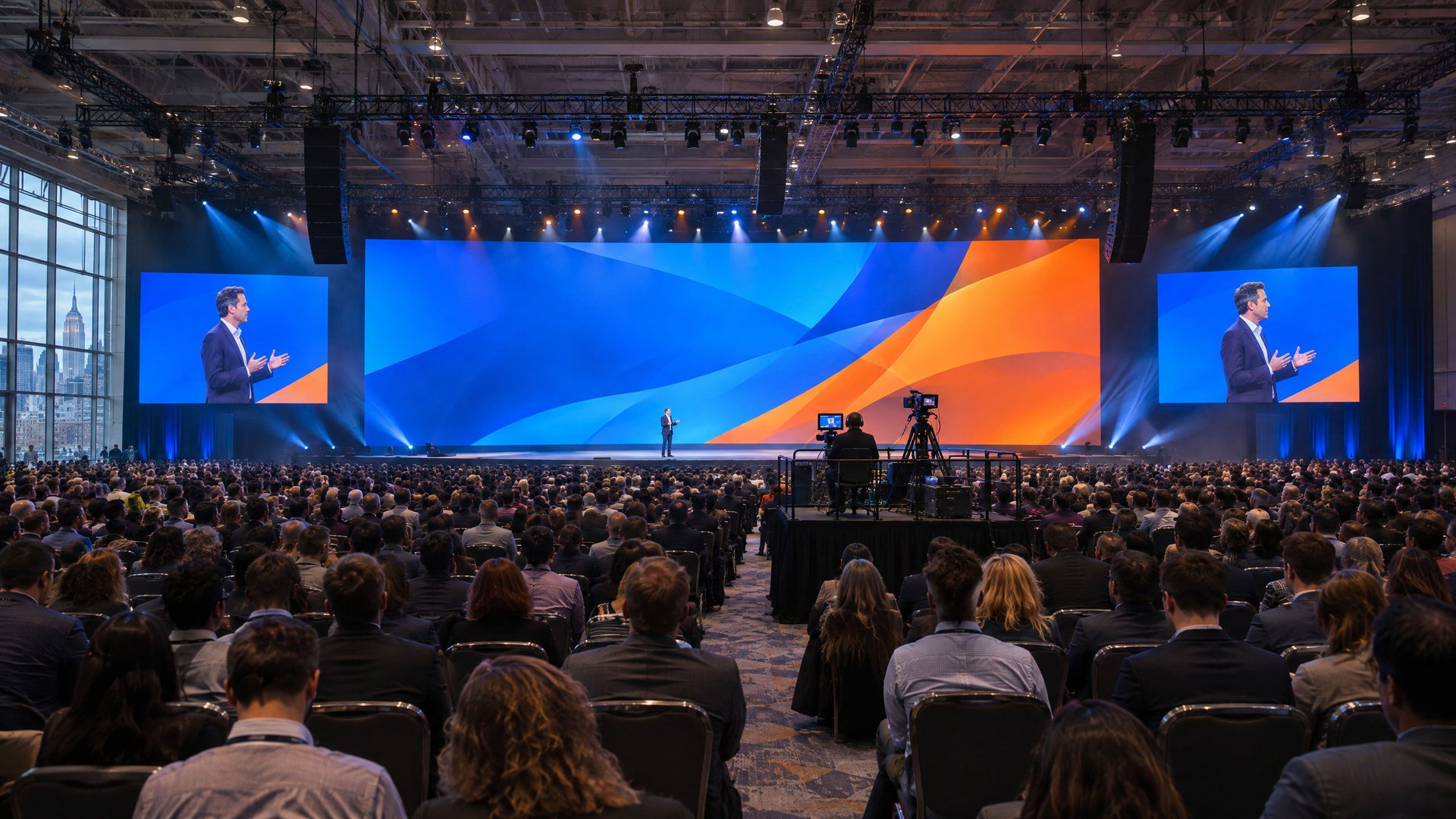
This guide covers what "large" means in practice, what it costs, and what has to be true about the venue before you book one. For the rental itself, see our LED screen rental page.
What counts as a large LED screen?
There is no official cutoff, but in event production the jump happens when a wall gets too big to simply stack on the floor in front of a stage. On our pricing page that is the step from the Stage tier to the Headliner and Arena tiers.
| Tier | Typical size | Typical use | Typical all-in day rate |
|---|---|---|---|
| Stage | 16×9 to 24×12 ft | Keynotes, galas, conferences | $7,000–$15,000 |
| Headliner | 24×12 ft and up, flown | Concerts, festivals, big rooms | $15,000–$30,000+ |
| Arena | 30×14 ft and up flown main wall, plus side screens | Festival- and arena-scale, multi-day runs | $50,000–$100,000 |
All-in covers the panels, processing, rigging, delivery, setup and teardown, and the on-site team. Larger tiers add a redundant signal chain, three-phase distribution and a bigger crew, which is why the price climbs faster than the screen size.
What drives the cost of a big LED screen?
- Size. Screens are billed by panel or square foot, so area is the biggest lever.
- Pixel pitch. Fine pitch can cost about 30–50% more than a coarser pitch. On a large screen viewed from far back, a coarser pitch usually looks the same from the audience and saves real money.
- Indoor vs outdoor. Outdoor screens add roughly 20–50% for brightness and weatherproofing.
- Rigging. Flying a wall from truss or rated points is an add-on to ground stack.
- Days. Day one carries the build; extra days typically bill at about 20% of day one, and weekly rates are cheaper still.
- Side screens and content. IMAG side screens (live camera feeds of the stage), switching and show content scale with the production.
See our LED wall rental pricing for every tier, or rough out a size with the LED wall calculator.
How do pitch and viewing distance work on a large screen?
A common rule of thumb is that the minimum viewing distance in meters is about the pitch number, and the comfortable distance in feet is about the pitch times ten. If your nearest viewer is 40 or 50 feet from a concert stage, a coarser pitch is all you need. Spend the budget on size and brightness instead. Our fine vs coarse pixel pitch guide compares the two ends of the range.
What rigging, power and load-in does a large screen need?
Big screens fail on logistics, not on panels. Before you book, confirm:
- Rigging. Can the venue fly the wall? Flown rigging needs rated rigging points or truss, venue approval and more build time. See ground stack vs flown rigging.
- Power. A large wall almost always needs three-phase power through a distro box, and outdoor sites without power need a generator. See LED wall power requirements.
- Load-in time. More cases means more time at the dock and in the freight elevator. In union venues, specific trades handle freight, rigging and AV work, and nights and weekends cost more. See our union venue guide.
- Tight windows. If the room turns over the night before, plan for an overnight build. Our overnight install guide explains how that works.
When do you need side screens and IMAG as well as a main wall?
In a big room, one large screen is often not enough. A wide audience at a concert, festival or general session sees the stage from sharp angles and from far back, so productions add side screens on either side of the stage. Those usually carry IMAG, short for image magnification: a live camera feed of the speaker or performer, so people in the back can see faces and not just a figure on stage.
Side screens change the plan in three ways. They need their own rigging or ground support, they add to the power load, and they need a switcher to route cameras, slides and video to the right screen at the right moment. On our pricing page, IMAG side screens and show playback are part of the Arena tier. For stage layouts, see our LED screen for stage guide.
What changes when a large screen goes outdoors?
For festivals, street events and screenings, a large outdoor screen has to beat daylight and handle wind and rain, which is why outdoor adds roughly 20–50%. Streets, plazas and parks in NYC also need permits filed by the organizer. Start with our outdoor big screen and jumbotron guide, then see outdoor LED wall rental and outdoor LED screen permits in NYC.
Frequently asked questions
How much does a large LED screen rental cost in NYC?
A large screen of about 24×12 feet and up typically runs $15,000 to $30,000+ per day all-in. Arena-scale builds, with a flown main wall of 30×14 feet and up plus side screens, run $50,000 to $100,000. Outdoor adds roughly 20–50%, and extra days bill at about 20% of day one.
Does a giant LED screen need to be flown?
Usually, at the largest sizes. Walls of about 24×12 feet and up are typically flown from truss or rated rigging points so the image sits above the crowd. Flown rigging is an add-on, needs venue approval, and takes more build time than a ground-stacked wall.
What pixel pitch should a large LED screen use?
Big audiences sit far back, so a large screen rarely needs the finest pitch. A common rule of thumb puts the comfortable viewing distance in feet at about the pitch times ten. A coarser pitch costs less and frees budget for size or side screens.
What power does a large LED screen need?
Large walls almost always run from three-phase power through a distribution box, sized from the wall's peak draw plus headroom. Outdoor sites without power need a generator. We price three-phase power and distribution as an add-on and plan it with the venue before load-in.
How far ahead should I book a large LED screen in NYC?
As early as the venue and rigging plan allow, because big builds need load-in time, power and sometimes permits. Same-week installs are often possible for smaller walls, but large flown screens need more planning. Send the venue and date for a same-day quote.
Planning a big screen? Send the venue, date, audience size and rough screen size through our contact page for a same-day quote, or see our concert LED wall rental page for stage builds.