An LED wall setup comes down to one early decision: is the wall ground-stacked on a frame that sits on the floor, or flown from truss and rigging points overhead? Ground stack is faster, simpler, and included in our day rate; flown rigging lifts the wall above crowds and stage gear but adds hardware, rigging points, crew hours, and venue sign-off. Most event walls in NYC take 4–8 hours to set up either way, plus calibration and a content test before doors.
Below is how we choose between the two, what a truss-mounted LED wall actually involves, how power and load-in fit in, and what to ask before you book. For the wider picture of booking a wall in the city, see our NYC LED wall rental page.
Ground stack vs flown: the short version
Both methods end with the same seamless wall. The difference is what holds it up, and that changes cost, timing, and what the venue has to approve.
| Factor | Ground-stacked | Flown (truss / rigging) |
|---|---|---|
| What holds it | A floor frame or ground support with ballast and bracing | Hung from truss or venue rigging points on motors or fixed points |
| Price on our quotes | Included in the day rate | Quoted separately as an add-on |
| Venue requirements | Floor space and floor load | Rated rigging points, house approval, often certified riggers |
| Sightlines | Bottom edge starts near the floor or on a riser | Wall sits above heads, stage gear, and performers |
| Typical use | Booths, lobbies, keynote backdrops, galas, most event walls | Concert stages, big ballrooms, IMAG side screens, large walls |
As a rule of thumb, if the room is low, the wall is modest, or the floor in front of it stays clear, ground stack is the answer. If people will stand in front of it, or the wall needs to clear a stage, a band, or a crowd, it usually needs to fly.
How a ground-stacked LED wall is set up
Ground stack is the default for most corporate events, galas, and trade-show booths. The wall builds up from a base frame, panel by panel, and is braced from behind so it stays plumb and stable.
- Base and bracing. A ground-support frame goes down first, leveled to the floor. Rear bracing and ballast keep the wall rigid.
- Panels. Our panels are modular cabinets, so the wall builds to almost any width, height, or aspect ratio. They lock edge to edge into one seamless surface.
- Height. Ground-stacked walls often sit on a riser or start a little off the floor so the bottom rows clear the stage lip and the first rows of seats.
Because nothing hangs overhead, ground stack needs no rigging points and less sign-off, which is why it is the faster, lower-cost route and why it is included in our pricing.
What a flown or truss-mounted LED wall involves
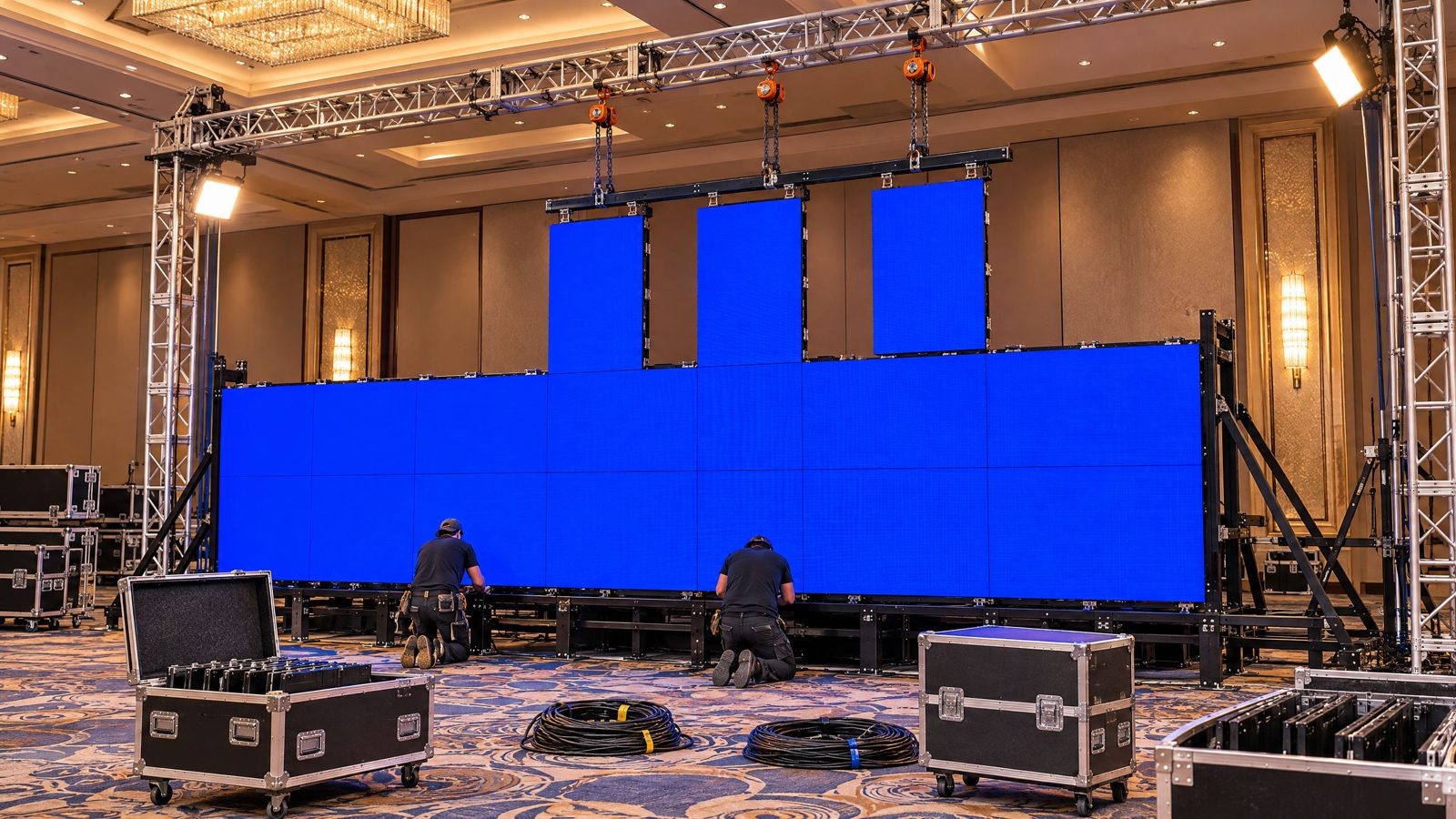
A flown wall hangs from above: either from truss the crew builds on site, or from rated points in the venue ceiling. The panels hang in columns from a header bar, then connect into one surface.
Why fly a wall at all?
Flying solves problems ground stack can't. It gets the image above a standing crowd, clears drum risers and performers, keeps the stage floor free, and lets a large wall fill a tall room. It's how most concert stages and big ballroom shows are built, and how IMAG side screens usually go up. For flown concert rigs, see our LED wall rental for concerts page.
What it adds
Flown rigging means more hardware, load calculations, rigging points, motors or fixed points, and more crew time. Many NYC venues require their own house riggers or union labor for anything hung overhead, and the house has to approve the plan. That's why we quote flown rigging separately rather than burying it in a day rate. Our union venue guide covers how that labor and paperwork usually works.
Power, signal, and load-in
Holding the wall up is only half of setup. The other half is getting clean power and signal to it, and getting it into the building.
- Power. LED walls draw a lot when they run bright, full-white content, and peak draw can be well above the average. Larger walls often need 3-phase power and a distribution box rather than wall outlets. On our quotes, 3-phase power and distro are an add-on, and our site survey checks what the venue can supply.
- Signal. Every wall runs through a video processor that scales your content and maps it across the panels. Larger builds get a redundant signal chain so one failure doesn't take the wall dark. Our video wall processor guide walks through each box.
- Load-in. In NYC the dock window, the freight elevator, and union rules often decide the schedule more than the wall does. Many installs run overnight to fit a venue's calendar. See how overnight and rush installs work.
How long LED wall setup takes
Most installs take 4–8 hours: rigging or ground support, panel assembly, cabling, calibration, and content testing. Flown and larger walls take longer, and so do venues with long pushes from the dock or tight elevator access.
- Survey. Before install day we check the venue, power, rigging points, sightlines, and the load-in path.
- Rig and power. Ground support goes down or truss and points go up; power and data get run.
- Build. Panels go up edge to edge.
- Calibrate and test. We calibrate brightness and color, then play your content end to end.
- Run and strike. An on-site technician runs the wall through the event, then we strike and load out.
Not sure how big the wall should be? Our sizing guide helps you size it to the room before rigging enters the picture.
What to ask before you book
- Is the wall ground-stacked or flown, and is that included or quoted separately?
- Who supplies the rigging points or truss, and does the venue require its own riggers?
- What power does the wall need, and can the venue provide it?
- How long is the install, and does the load-in window fit the venue's schedule?
- Is there an on-site technician for the whole event, and are spares on the truck?
A complete quote answers all five in writing. Our guide to what's included in an LED wall rental has the full checklist.
Frequently asked questions
What is a ground-stacked LED wall?
A ground-stacked LED wall is built up from a frame that sits on the floor, braced from behind, instead of hanging from truss or rigging points. It is the most common setup for corporate events, galas, and booths because it needs no overhead rigging and installs faster. Ground-stack rigging is included in our LED wall rental day rate.
Can an LED wall hang from truss?
Yes. LED panels can be flown from truss or from rated venue rigging points, hanging in columns from a header bar. Flying lifts the wall above crowds and stage gear and suits concerts and large rooms. It adds hardware, rigging points, crew time, and venue approval, so we quote flown rigging separately.
How long does it take to set up an LED wall?
Most LED wall installs take 4–8 hours, covering rigging or ground support, panel assembly, cabling, calibration, and a content test. Flown or very large walls take longer, as do venues with difficult load-in access. In NYC, many installs run overnight to fit the venue's schedule and union load-in windows.
Does an LED wall need special power?
Often, yes. Small walls can run on standard circuits, but larger walls usually need 3-phase power and a distribution box, because draw rises sharply with bright, full-white content. We check the venue's power during the site survey, and 3-phase power and distribution are quoted as an add-on when the wall needs them.
Is flown rigging more expensive than ground stack?
Yes. Flown rigging adds truss or rigging hardware, load planning, rigging points, extra crew hours, and sometimes venue riggers, so it costs more than ground stack. On our quotes, ground-stack rigging is included in the day rate and flown rigging is listed as its own line, so you can see the difference before you book.
Planning a wall and not sure whether it should stack or fly? Send us the venue, date, and rough size through our contact page and we'll come back with a same-day quote and an install plan, rigging included. You can also see how setup fits into the price on our pricing page or read about our LED wall installation service.